Author: wordpress_df57be5d120c

How to Spot Fake HMDD Track Pants Fit and Fabric Notes

HMDD’s Visual Style: Unpacking the Brand’s Visual Identity

HMDD unpacks to “Happy Memories Don’t Die,” a phrase that drives the label’s look-and-feel output. That name isn’t mere marketing dressing; it reads as a manifesto on nostalgia, permanence, and the way clothing can carry meaning once the original moment has faded. Anyone searching hmdd review threads or forums will notice the same pattern: people talk less about trends and more about how the pieces read as mementos. That distinction matters in a market flooded by branding-first streetwear reinventing itself season after season. The brand’s look pushes back against that cycle by staying loyal to a consistent emotional tone rather than chasing whatever is loud at the moment. Grasping this philosophy is key to seeing why the label’s style feels intentional instead of reactive.

This article breaks down the underlying design language behind HMDD clothing — hue selection, type treatment, fit reasoning, and material picks — and measures it up to general streetwear conventions so shoppers exploring hmddla or the full HMDD range in 2026 know what they’re actually buying into.

The Underlying Design Language: Remembrance as Design Principle

Most streetwear brands build identity around aggression or exclusivity — bold graphics, limited drops, hype-driven scarcity. HMDD goes a different way. That line, “happy memories dont die,” recurs across the lineup not blasted in giant lettering, but often folded into minor placements, distressed treatments, or set against muted colorways that suggest something lived-in rather than freshly manufactured. https://hmdoutlet.com/shorts-sweatpants/ It’s a purposeful design call: clothing that looks like it already has history invites a different kind of attachment than apparel that seems new and forgettable.

The visual identity draws heavily from archival and vintage sensibilities. Washed-out tones, slightly distressed textures, and typography that echoes hand-lettered signage or old ephemera all signal a design team focused on permanence. Six or seven years back, streetwear was built almost entirely around sharp contrast and neon highlights; HMDD’s color choices lean toward tonal restraint instead, letting a single graphic or phrase carry the emotional weight of a piece. That restraint is part of why the brand photographs so consistently well across seasons — the aesthetic doesn’t rely on trend-driven color cycles to stay relevant.

Cut and Shape: Comfort Designed Into the Aesthetic

HMDD’s sweatpants and hmdd shorts are central to making sense of the label’s silhouette philosophy. Each category lean toward loose, roomy shapes — broad leg openings, lowered inseams, and stretch waistbands that favor ease of motion ahead of shape. This isn’t accidental. A brand built around comfort-as-memory needs clothing that physically feels easy to live in, because the visual message only works if the wearing experience backs it up. Snug, architected cuts would clash with the underlying mood of nostalgia and comfort.

The sweatpants commonly come in either tapered or straight-leg cuts, varying by release, paired with visible stitching details as well as small embroidered script at the hem or thigh on some pieces — subtle enough not to overwhelm the garment’s clean lines. The shorts follow a similar logic: longer inseams than typical athletic shorts, a fit that’s a touch boxier at the hip, along with understated logo work that reveals itself up close instead of shouting from afar. That restraint-focused approach to shape stays consistent throughout nearly all of the brand’s released categories, which is part of why repeat customers describe the fit as predictable in the best sense — the sizing stays dependable release after release.

Palette Approach and Fabric Decisions

The brand’s color scheme cycles through earthy hues, washed-out pastels, off-white shades, and soft greys, occasionally punctuated by deep navy or black tones reserved for contrast items. Compared to most rivals, this is a narrower, more deliberate palette, and that largely explains why the label’s social feed and product pages come across as unified instead of disjointed. Weight-wise, sweatpants skew mid-to-heavy cotton fleece, and shorts skew lighter cotton-blend terry, even though exact composition varies by specific product listing, so shoppers should always check the individual product page for the piece they’re considering before buying.

The dye and wash methods applied throughout the collection feed directly into that lived-in visual signature mentioned earlier. Garment dyeing and enzyme washes are common tools in streetwear for producing that pre-worn quality before a single wear, while the brand’s finished pieces frequently show that same soft-hand, faintly faded character. It’s a texture choice as much as a color choice — even the fabric’s texture contributes to the nostalgic narrative.

Type Choices and Graphic Layout

Lettering used throughout HMDD’s product lines leans toward serif or hand-drawn script for the “Happy Memories Don’t Die” phrase, sometimes paired in contrast with heavier sans-serif type reserved for logo marks. This pairing — delicate script beside rigid structure — mirrors the label’s overarching tension between fragility, as memories fade, and permanence, as they persist. Graphics are typically positioned asymmetrically or off-center, a minor but telling detail that distinguishes HMDD from labels that always center their logos in the middle of the chest.

Placement decisions on sweatpants and shorts specifically typically sit at the hemline, side seam, or lower thigh, spots catching attention and light only when the wearer shifts. This is a more discreet branding strategy than the majority of direct-to-consumer streetwear labels pursue, and it’s one of the more often-cited details in an hmdd review when shoppers explain why the garments feel more “wearable long-term” than trend pieces bought for a single season.

In What Way HMDD’s Visual Identity Compares to Comparable Streetwear Brands

To situate the aesthetic in context, it helps to weigh HMDD’s central design decisions against two common streetwear categories: the logo-driven hype label and the minimalist basics brand. The breakdown below maps out where HMDD lands in comparison to those two categories across a number of design and functional criteria.

Design Element Logo-Driven Hype Brands Stripped-Back Basics Brands HMDD Clothing
Color Scheme High contrast, neon accents Monochrome, mostly black/white/grey Earthy shades, faded pastels, muted contrast
Graphic Placement Large, centered chest/back prints Little to no branding Small, off-center, hem or side-seam
Approach to Fit Oversized for shock value Fitted to standard, tailored Relaxed, comfort-first, consistent sizing
Fabric Finish Stiff, unwashed Smooth, uniform Soft to the touch, garment-washed, lived-in texture
Underlying Message Prestige and rarity Function and simplicity Sentiment and staying power

What this comparison shows is that HMDD occupies a middle ground most competitors ignore. It takes on the discipline of minimalist labels but adds the sentimental storytelling that hype brands usually reserve for splashy graphics. That hybrid position is perhaps the most straightforward way to account for why the best hmdd clothing pieces — typically the shorts and sweatpants that anchor the lineup — get repeat praise for feeling quietly meaningful and restrained at once.

Buying HMDD in 2026: What to Look For

For those browsing hmddla listings or the brand’s own site this year, several practical checkpoints help separate the standout pieces from the rest of the catalog. Firstly, check the material weight listed on the product page — heavier fleece sweatpants tend to hold their shape and washed texture longer than lighter blends. Second, look carefully at images of the print positioning; the off-center design touch is a consistent signature of authentic design intent rather than a generic add-on graphic. Lastly, read fit notes carefully, since the roomier cut across sweatpants and shorts fits looser than standard athletic wear, and what looks like a true-to-size medium may wear closer to a loose large.

As a final point, be mindful of the color-batch details. Because HMDD leans heavily on garment-dye-and-wash treatments, minor inconsistency between production runs is to be expected and entirely ordinary — the olive shade in one release could differ slightly from another. This isn’t a defect; it’s in keeping with HMDD’s entire aesthetic argument that clothing should feel individual and time-worn rather than mass-stamped identical. Shoppers who understand that going in typically walk away more satisfied and deeper clarity on why HMDD’s aesthetic has stayed so unified across multiple release cycles.

Ultimately, the look HMDD has built actually works since all the visual elements — color scheme, silhouette, type treatment, fabric finish — circles back to a single core notion embedded in HMDD’s own name. Across the streetwear world, it’s rare to find a case where the creative logic and the branding pitch are actually the same sentence, played out in the fabric itself instead of just in a tagline.
HMDD Apparel Trends 2026 Fabric and Feel

Ahead of Buying HMDD Shorts, Here’s the Full Picture

HMDD has cultivated a quiet but loyal fanbase among consumers who want streetwear that feels individual rather than factory-churned. The brand name itself is shorthand for “Happy Memories Don’t Die,” a phrase that appears printed on tags, inked onto tags, and nodded to across the HMDD clothing line as a kind of quiet refrain. Before you add a pair of shorts to your cart, it helps to understand what the brand is really about, how the shorts are built, and where they rank compared to other options in the same price bracket. This breakdown pulls apart the concrete details so you’re not in the dark when the package arrives.

People who look up an hmdd review online are typically trying to settle three questions: does the fit match expectations, does the fabric stay intact after washing, and is the price justified by the construction. We’ll tackle these points one by one, using what’s known about the shorts’ build rather than vague marketing language. If you’ve already tried hmdd sweatpants or other pieces from the label, some of this will feel familiar, since the brand generally keep its construction philosophy uniform across categories.

HMDD’s Origins and What the Name Means

As a concept, happy memories don’t die is more than a tagline stuck on a hangtag. It guides the visual identity of the brand — toned-down colorways, worn-in graphic treatments, and a general avoidance of loud, hype-driven prints. The shorts echo that same restraint. Instead of plastering logos across every inch, HMDD tends to place a solitary graphic or wordmark on the leg or hem, leaving the rest of the garment clean.

For buyers weary of oversized branding taking over every panel, this makes a difference. HMDD clothing, shorts among them, leans toward pieces that read as considered rather than loud. That’s part of why the brand shows up hmddla apparel frequently in “hmddla” searches — shoppers associate the label with a Los Angeles-adjacent streetwear sensibility that leans into subtlety over spectacle. If that aesthetic appeals to you, the shorts will most likely fit your expectations before you even open the box.

Sizing and Fit: What to Expect Once They’re On

Fit is the flashpoint in most hmdd review debates, and for good reason — sizing unpredictability is the top complaint across virtually every streetwear label, not just this one. HMDD shorts typically run in a easygoing silhouette rather than a fitted or performance-style cut. That means the waistband sits with extra space, the leg opening isn’t cinched narrow, and the overall drape is closer to a casual-street crossover than a tight athletic short.

If you’re between sizes, the general guidance from repeat buyers is to size according to how you want the shorts to sit — true to size for a fitted look through the hip, or one size up if you prefer them to sit lower and looser. Because exact measurements vary by drop and by specific style, always check the size chart listed on the actual product page before ordering, since HMDD updates fits between releases. Skipping that step is the most common reason people end up disappointed with the shorts they receive.

Breaking Down the Fabric & Construction that Determining What You Pay

The thing that decides whether shorts get repeat purchases or get shelved after two wears comes down to construction quality. Depending on the specific drop, HMDD’s shorts generally rely on a denser cotton-blend fleece or twill foundation, which lends them shape while staying far from rigid. The stitching on pocket seams and waistbands tends to be reinforced at stress points, which matters if you’re someone who’s hard on your clothes during daily wear.

Drawstrings, when included, are usually flat rather than round, which keeps them from slipping loose during movement — a small detail, but one that shows up in long-term reviews as a point of praise. Elastic waistbands are stitched rather than glued, meaning they hold their shape after repeated washing instead of curling or separating at the seams within a few months. None of this is flashy, but it’s the kind of detail that determines whether a $60–$90 short still looks good a year from now.

Breaking Down the Way HMDD Shorts Measure Up Alongside Competing Streetwear Picks

To put HMDD shorts into perspective, it helps to see how they measure up against competing streetwear names active in a matching price range and aesthetic lane. The chart that follows outlines general positioning based on commonly understood category norms — fit philosophy, material heft, and price bracket — rather than exact specs, since such details vary by individual drop.

Brand Segment The Way It Usually Fits Density of Material Typical Cost Window The Way Logos Show Up
HMDD Comfortably roomy through the hips and thighs A cotton blend with mid-to-heavy weight Middle-of-the-road pricing ($60–$90) A lone graphic kept understated
Widely-distributed streetwear Spanning from fitted to athletic Light cotton or poly blend Wallet-friendly pricing ($25–$45) Prominent logo positioning
Small-run boutique brands Often loose-cut, shifting from drop to drop An heavy twill or fleece material Premium ($90–$150) Minimal to avant-garde

The brand falls in a middle lane, as this makes clear — the label is not as cheaply made as fast-fashion rivals, yet it avoids luxury-level pricing. That positioning is probably why the label turns up so often in “best hmdd clothing” searches: it’s accessible enough for everyday wear, but constructed well enough to warrant the cost over short-lived competitors.

How to Pair the Shorts Together With the Rest of the HMDD Lineup

Purchasers seldom buy shorts as a standalone item, and HMDD’s product range is designed with that in mind. Since the color palettes across releases tend to remain consistent season to season, the shorts match easily with the brand’s heavier hoodies and crewnecks. Owning hmdd sweatpants already means there’s a decent likelihood the shorts carry over the same drawstring fittings, waistband build, and shared shape philosophy, simply trimmed down in length.

This uniformity is a intentional choice. Rather than viewing each product category as a standalone item, HMDD designs collections where pieces are meant to be mixed — a short from one drop with a tee from another, or layering a hoodie over shorts when temperatures dip. Keep this in mind if you’re building out a full rotation rather than buying a single item, because it means reselling and matching pieces over time are easier than with brands that overhaul their fit philosophy every season.

Frequent Gripes and How to Avoid Them

It wouldn’t be a full hmdd review without touching on the recurring complaints. The top complaint reported by shoppers is sizing confusion, most notably for anyone ordering without checking the specific chart for that drop. Shipping timelines come in as another frequent issue, since smaller streetwear labels don’t always match the fulfillment speed of bigger retailers, so possible holdups around major release windows should be expected.

Some buyers, a smaller group, have noted that colorways can look slightly different in person versus product photography — a common quirk across nearly all online apparel shopping, but still worth flagging. Most of these problems have an easy fix: read the specific product description closely, check for any listed restock or shipping notes, and don’t assume fit consistency across different drops without verifying first. Putting in that groundwork beforehand eliminates the majority of return-related frustration.

The Bottom Line: Is HMDD Worth It in 2026

As we move into 2026, HMDD stands as a dependable mid-range pick for anyone who wants streetwear shorts with a easygoing fit, solid fabric weight, and low-key branding rather than attention-grabbing logo placement. Construction touches — reinforced seams, flat drawstrings, stitched waistbands — stand up well relative to the price point, and HMDD’s reliability across its lineup makes it easy to put together a full wardrobe set rather than buying short-lived pieces drop after drop.

If you’re weighing HMDD against competitors, the deciding factor usually comes down to fit preference and budget. Buyers who want a slimmer, athletic cut may find the relaxed silhouette not to their taste, but anyone drawn to a laid-back, lived-in aesthetic — the same sensibility baked into “happy memories dont die” as a brand ethos — will likely find the shorts deliver exactly what they’re expecting. Check the current size chart, confirm the specific fabric listed for that drop, and you’ll know going in whether this is the right fit for your wardrobe.

Ferragamo Leather Studio Bag Made in Italy

Salvatore Ferragamo or Ferragamo? The 2022 Rename, Explained

Two people can give you two different answers about what this house is called, and neither is wrong. Since around 23 September 2022, the label on the bags, the storefronts and the show invitations has carried simply FERRAGAMO. Yet the annual report, the share listing and every major resale platform still say Salvatore Ferragamo. This is not a contradiction, and it is not a half-finished rebrand that somebody forgot to complete. It is a precise distinction between a brand mark and a legal entity, and once you grasp it the confusion goes away for good. The rest of this piece takes that single insight apart and puts it back together.

What did change in September 2022

Around 23 September 2022 the change was announced, positioned ahead of the Spring/Summer 2023 show. What moved was the mark: the founder’s handwritten script signature gave way to a custom serif drawn by the designer Peter Saville, referencing the lettering of classical stone inscriptions. Off the front of the brand dropped the word Salvatore. That is a considerable shift in tone, because a handwritten signature says founder, family and workshop, while a cut serif suggests institution, monument and permanence. It arrived in the same period as Maximilian Davis’s tenure as creative director, which began in March 2022, so the visual reset and the design reset coincided. Only the front of the label lost the founder’s name; the story kept it, and the archive he built still supports every current bag. In practical terms, a bag bought after that point carries a brand identity exactly one word long.

What did not change: the company

Its name is unchanged at company level, and it was never dropped. The legal entity standing behind every Ferragamo bag is Salvatore Ferragamo S.p.A., and its own 2026 investor documents use exactly that name. Listed on Borsa Italiana under the ticker SFER, it remains family-controlled. feragamo.org/shoulder-bags So this was a rename of the mark, not of the corporation, a distinction that sounds like pedantry right up until you try to reconcile a boutique window with a financial filing. Nothing about the ownership, the Florentine headquarters at Palazzo Spini Feroni or the corporate structure was renamed alongside the logotype. That is why both names are live at once, in different registers: one is a brand, the other is a company.

Why resale never made the switch

Resale is where the older name survives most stubbornly. Every major pre-owned platform still catalogues the house under Salvatore Ferragamo, so a listing for a Gancini crossbody or a Hug shoulder bag sits in that category regardless of when the bag was made. There is a practical reason. Because those catalogues span decades of stock, relabelling an archive of bags made long before 2022 would invalidate every historical listing and every saved search. What buyers type is what is stamped inside the bags they already own, which changes at a crawl. So the secondary market has kept the founder’s first name in circulation even as the boutique dropped it. If you shop pre-owned and search only the short form, you will walk past inventory sitting in plain sight.

Where you will meet each name

It helps to think of the two names as belonging to different surfaces rather than different eras. On a shop front, a hangtag, a campaign or a runway credit you will find the one-word mark. On a share listing, an annual report or a corporate release you will see the full company name. On a resale platform, in a search box, or in a wardrobe someone has owned for fifteen years, the founder’s name survives. None of these is wrong, and none of them cancels the others out. The table below maps where each version turns up, so you can stop second-guessing which one you are looking at.

Context Version used Why that one
Storefront, hangtag, campaign, runway Ferragamo The brand mark adopted around 23 September 2022, logotype by Peter Saville
Stock listing, annual report, regulatory filings Salvatore Ferragamo S.p.A. The legal corporate name, left as it was; ticker SFER on Borsa Italiana
Resale and consignment platforms Salvatore Ferragamo Catalogues cover decades of stock, so archive listings stay findable
Search bars and everyday talk Both versions, plus misspellings Habit outlasts branding decisions by years

The search box question

Of all the surfaces, search behaviour is the least tidy, and bluntness helps here. People still type salvatore bag and salvatore bags when they mean handbags from this house, because that is the name they learned first. ferragamo bag and ferragamo bags get typed too, and anyone hunting for a discount will type ferragamo sale or ferragamo outlet. A reliable share of them type feragamo, with a single r, which is the most common misspelling of the name. Not one of these queries means a different brand, since they all mean the same Florentine leather goods. In practice, test more than one spelling before you decide a model is unavailable.

Did the bags change?

A logo change is not a product change, and it is fair to ask what moved on the bags. Gancio and Gancini hardware were kept, with both spellings still the house’s own usage; current copy describes two golden Gancio buckles on the Hug XS and an iconic Gancini closure on the Cara. Made in Italy stayed, with every current bag product page carrying it and the Studio Bag collection page stating that each bag is crafted in Italy. So did the material vocabulary, which still takes in smooth and grained calfskin, suede, python, hand-woven wicker with silk lining, raffia, canvas and jacquard. What did move was emphasis, as the Hug became the assortment’s centre of gravity and the Cara arrived as the newest architectural silhouette. Prices did not shift either: observed 2026 market prices on the label’s own site still run from roughly $830 for an entry Double Gancini piece to about $4,800 at the top of the everyday range, with a thin exotic tail above it. What changed was the way the house signs its work, and nothing else: the design language survived intact.

What it means when you shop

Treat the two names as two doors into the same room. For anything current, use the one-word form, because that is how the brand’s own webstore, its roughly 354 boutiques and its authorised stockists organise their pages, Nordstrom, Bloomingdale’s, Saks Fifth Avenue, Mytheresa and Farfetch among them. For anything pre-owned or archival, search the founder’s full name as well, because that is how the platforms are indexed. Do not read the older name on a listing as a warning sign, and do not read the newer one as proof of anything either, since both appear in entirely legitimate contexts. There is one structural fact worth keeping: no official online outlet exists, only seasonal sale sections on the label’s own site and brand-operated stores inside outlet villages. A website that passes itself off as an official online outlet, whichever version of the name it uses, is not this brand. The house takes that seriously enough to publish numbers, reporting 107 fraudulent websites and 89,136 counterfeit listings removed for 2022 alone.

The short version

If you want the distinction in one line, here it is: the brand is Ferragamo, the company is Salvatore Ferragamo S.p.A., and both are correct in 2026. The rename that took effect around 23 September 2022 changed the mark, the logotype and the way the house presents itself, and it left the corporate name untouched. Anyone telling you the brand was renamed outright has half the story; anyone telling you nothing changed has the other half. The founder’s name is sustained by resale platforms, by search habits, and by every wardrobe stocked before 2022. Whichever version gets you to the bag you want is the right one to use, and you should expect to meet both. The house has made room for two names, and it shows no sign of collapsing them into one.

Example Post for WordPress

This is a sample post created to test the basic formatting features of the WordPress CMS.

Subheading Level 2

You can use bold text, italic text, and combine both styles.

  1. Step one
  2. Step two
  3. Step three

This content is only for demonstration purposes. Feel free to edit or delete it.

Ferragamo Vara Collection Gift Wrapping Available

The Gancini Motif: A Hook That Can Actually Be Dated

The origin story of a fashion motif is usually vague. Somebody’s grandmother, a saddle fitting, a ship’s rope: the details wander, nobody can pin a year, and the house is usually glad to leave it that way. The Gancini is unusual because it can be dated. In 1972 Women’s Wear Daily published a photograph of a Ferragamo bag with a hook-shaped metal closure, and that image is the motif’s first documented appearance, verified through the brand’s own foundation. A hook with a paper trail is a rare thing in this industry. That is also why the Gancini holds the weight it does across Ferragamo bags today, from an $880 clutch to a python handbag several times that price.

1972, and what makes the date so unusual

The date only lands once you know how young the leather goods were at that point. Salvatore Ferragamo built the house on footwear from 1927; bags only began in 1965, when Fiamma Ferragamo started designing them as accessories to the shoes, and the first press article featuring a Ferragamo bag is dated 1969. The hook therefore enters the trade press barely three years after bags became a story worth reporting at all. The timing is important, since it shows the motif was not added later onto an established handbag line to supply heritage. shop tote bags The motif arrived while the category itself was still being invented inside the house, acting as a working closure on a working bag. A motif that begins as a functioning fastening tends to outlive one that begins as an ornament, and this one has.

Gancio or Gancini? Both are correct

Shoppers regularly ask which spelling is correct, and the honest answer is that both belong to the brand. Loosely speaking, gancio is the single hook and gancini is the plural — the motif, or the family. In practice Ferragamo uses the two freely across its own product copy. Current descriptions refer to two golden Gancio buckles on the Hug XS and to an iconic Gancini closure on the Cara, in the same season, on the same site. If you are searching a resale platform, try both, since listings reproduce whichever word the seller copied off the original tag. Neither word is a typo, and neither signals a separate product line.

The real work the hook does on a bag

The motif has three distinct jobs in the collection, and they are worth separating. First comes the clasp: a piece of cast metal that genuinely opens and closes the bag, which is how it showed up in 1972 and how it is used on the Cara today. Second comes applied hardware: a plate, buckle or chain link holding the visual weight without handling the closure, as on the Hug’s wrap straps. Third comes pattern: embossed, outlined or woven across leather, canvas and jacquard, rendering the hook a surface rather than a fitting. Those three registers let one motif run from an entry-level clutch to the top of the range without repeating itself. It also explains how two Gancini bags can look nothing alike yet still read as the same family.

Where you meet it in the current collection

The hook is the most affordable way into the house, and that is worth stating plainly. The Double Gancini group absorbs most first purchases, stretching from a clutch at $880 through mini shoulder bags at $1,250 to $1,490 and a mini bag at $1,350, up to a top handle XS at $2,500 and crossbodies at $2,400 to $2,900, with one observed as low as $830. Above that sit a Gancini chain mini at $1,850, an outline tote at $1,750 to $1,850, a wallet with chain at $890 and a folded chain clutch at $1,790. The family’s ceiling is a medium Gancini handbag in python with golden hardware, suede lining and a custom key fob at $4,100, listed at 7.2 inches high, 13.3 long and 4.7 wide, with a 21.7-inch strap and an 8.9-inch handle drop. These are all observed 2026 market prices, taken from the brand’s own United States site on a single day rather than from an official price list. The table sets out how the motif changes form as the price climbs.

Item The form the motif takes Observed 2026 market price
Double Gancini clutch Clasp in cast hardware $880
Gancini wallet with chain Hardware closure with chain link $890
Double Gancini mini shoulder Clasp in hardware $1,250 to $1,490
Gancini outline tote Outlined motif over the body $1,750 to $1,850
Double Gancini top handle XS Working structural clasp $2,500
Gancini handbag, medium, python Golden hardware over suede lining $4,100

The Vara question

A correction has to go here, since this one circulates constantly. The Vara is a shoe rather than a bag. The low-heeled pump with its grosgrain bow, created in 1978 by Fiamma Ferragamo, has sold more than a million pairs and belongs entirely to the footwear side of the house. It is not a handbag line and never has been, which makes any reference to a Vara handbag collection flatly mistaken. The bow does cross into leather goods occasionally as a borrowed detail, most clearly on the Ginny, a Vara-plate bowling bag that turns up in resale rather than in the current line-up. Keeping the two straight matters when you shop pre-owned, because a listing that calls the Vara a bag was written by somebody who did not check.

Reading the hardware

Being cast metal, the hook is the part of a Ferragamo bag people inspect most closely. Finishes are mostly gold-tone, with silver-tone on a minority of pieces, and gold-tone plating is exactly that — plated rather than solid — so abrasive cleaners are a mistake. Beyond that, it helps to be clear about what the brand does and does not publish. No public authentication guide is issued by Ferragamo; its only stated guidance is to buy from its own website or from authorised stores and distributors. What follows is shared opinion among pre-owned buyers rather than anything the house has confirmed, and it should be treated as soft signal only. Its Repair Services are the brand’s nearest official approximation to an in-person check, offered for a selection of authentic products at selected boutiques with proof of purchase.

  • The crispness, spacing and spelling of the stamping on the interior leather tag.
  • Weight and casting standard in the Gancini hardware itself.
  • The evenness of the stitching along edges, gussets and straps.
  • How the leather handles against known examples.
  • The white dust bag and its red drawstring.

The hook second-hand

Gancini pieces perform differently second-hand from the house’s headline silhouette, and the gap is telling. In September 2026 on one major platform, a medium Gancini turnlock flap was listed at $1,130 to $1,190, a Gancini Margot hobo at $1,020, a medium jacquard Gancini shoulder tote at $935 to $1,045 and a small Gancini crossbody at $690. A vintage Gancini flap shoulder bag in medium was listed at $560, close to the archive floor. The exception was a large Trifolio tote in embossed Gancini at $2,040, the top of the archive band, in a style no longer in the United States line-up. So the hook holds a broad, steady band of roughly $560 to $1,200 rather than a sharp peak. Brand-operated stores inside outlet villages hold Gancini pieces as well, yet there is no official online outlet at all, so any site presenting itself as one is not the brand.

Why a documented birthday matters

It would be simple to file the 1972 photograph as trivia, and it is not. A dated first appearance means the motif can be followed rather than merely asserted, and that is uncommon enough in fashion to count for something. It also means the hook predates almost every current Ferragamo bag by decades, so a Gancini clasp on a 2026 shoulder bag is genuinely continuous with the archive rather than a revival of it. For a buyer, that continuity is the practical argument: a motif this embedded is unlikely to be quietly dropped, and pieces carrying it stay legible across seasons. Walking through a Ferragamo shop, waiting for a seasonal Ferragamo sale or scanning listings that resale platforms still file under Salvatore Ferragamo, you will find the hook is the thread running through. More than fifty years after a photographer pointed a camera at it, the hook is still doing the same job.

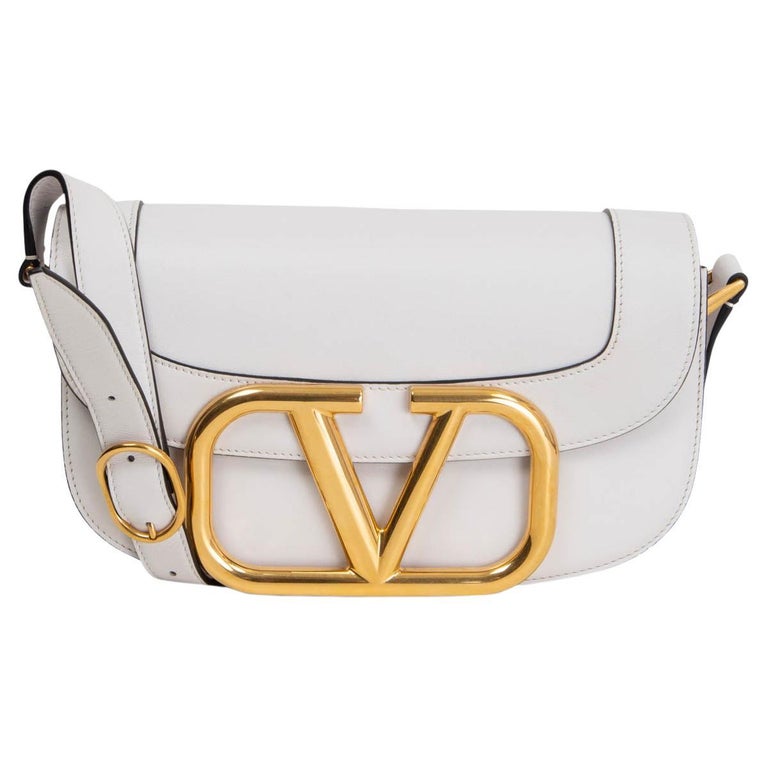
Iconic Valentino Style Red Carpet Ready

The Rockstud Bag: Origin, Shapes and Prices

No detail this house makes is more recognisable than flat pyramid studs, ranged along an edge or scattered across a flap. Rockstud is also the broadest and cheapest part of the leather goods collection, roughly fifty-two pieces of it live on the brand’s own US site in September 2026. Observed prices run from $1,250 to $2,100, below the evening bags and below most of the shoulder lines. Which is why, more often than not, it is the first Valentino bag anyone buys. What follows covers the motif’s origin, the shapes on sale now, the prices observed for each, how Rockstud Spike differs, and how the line behaves on resale. Every figure is a market price seen on the brand’s own webstore rather than an official price list.

Where the motif started

Launched in the Fall 2010 collection by Maria Grazia Chiuri and Pierpaolo Piccioli, then co-creative directors, the Rockstud motif appeared first on footwear. The inspiration cited is Roman bugnato rustication — the faceted projecting stonework covering Renaissance palazzi in the city where the house was founded in 1960. That explains the stud: a shallow four-sided pyramid with a flat top, far closer to masonry than to valentinoutlet.org/mini-bags punk hardware. Valentino Garavani, the founder, sold the company in 1998, left design behind in 2007 and died on 19 January 2026. The motif is therefore exclusively the work of the designers who followed him. The widely repeated claim that the Rockstud bag launched in 2016 rests on a single source alone and should not be treated as established.

Which shapes you will really find

Rather than one bag, Rockstud is a motif applied across a family of shapes. On the product pages, size and function do the naming instead of by model number. The family clusters around four things — a mini shopping tote, a small crossbody, a small shoulder bag, and wallets and small leather goods. Sizes are quoted as small and mini throughout, so the line skews compact even where the word shopping appears. What divides two otherwise identical bags is mostly material and hardware finish. Made in Italy throughout, per the brand’s own product pages state.

The mini shopping tote

This is the accessible route into the line and the most practical Valentino tote bag at this price. It was listed at $1,390 in grainy calfskin or suede, at $1,490 in raffia, at $1,750 in laminated calfskin and at $1,850 in pony-effect calfskin. The spread comes from finish, not construction, which means more money buys a surface and not extra capability. The durable default is grainy calfskin; raffia is seasonal and more delicate; laminated and pony-effect finishes are the ones that scuff. Being a mini, it carries a phone, a small wallet and keys rather than a working day’s contents. Anyone needing a full-size shopper should look at VLogo Signature shopping bags, observed between $2,650 and $3,750.

Crossbody, shoulder bag, chain wallet

Doing most of the work is the small crossbody, observed at $1,650 to $1,950 in grainy calfskin and at $1,790 in laminated calfskin. A laminated calfskin wallet at $1,250 also works as a chain wallet, which makes it the cheapest route into the motif in a wearable format. At the top of the standard range is the small shoulder bag: $1,950 in suede, $2,100 in grainy calfskin. A single quirk deserves a mention: there is no crossbody category page on the brand’s own US site whatsoever. Its bag navigation runs through shoulder bags, totes, top handle bags, clutches, wallets and small leather goods, so a Valentino crossbody bag has to be found under shoulder bags there, even though major retailers keep dedicated crossbody pages. A removable, adjustable strap comes with most of these styles, so they can be worn either way.

Rockstud Spike, the quilted sibling

Not a variant at all, Rockstud Spike is a separate line — and a considerably dearer one. Prices observed run $2,400 for a crossbody clutch up to $3,700 for a medium embroidered nappa piece. The differences are quilting and a chain — and studs set into the quilted surface rather than lined along an edge. Price follows material here as well: small suede at $2,550, small nappa at $2,800, medium kidskin at $2,950, medium suede between $2,750 and $3,200, and medium nappa at $3,500. Unlike the standard Rockstud, it is an evening bag, and it sits closer to the Locò and VSling families. If you want the studs with a chain strap and a softer body, this is the line.

What it costs in 2026

Below, the observed prices referenced above are gathered into one table. These figures come from the brand’s own US webstore in September 2026 — a market snapshot, not an official price list. Two patterns deserve attention. First, standard Rockstud occupies a narrow band from $1,250 to $2,100 and never reaches the house’s top tier, where embroidery, crystals and exotic skins push bags past $7,000. The second is that Rockstud Spike starts about where standard Rockstud stops, leaving the two barely overlapping. The house does run official seasonal sales on its own site, and as of September 2026 the US sale page states that the Spring/Summer 2026 sale has ended, so a Valentino bag sale is a periodic event rather than a permanent condition.

Style Leather or material Market price observed in 2026
Rockstud chain wallet Laminated calfskin $1,250
Rockstud mini shopping Grainy calfskin or suede $1,390
Rockstud mini shopping Raffia $1,490
Rockstud small crossbody Grainy calfskin $1,650 through $1,950
Rockstud mini shopping Pony-effect calfskin $1,850
Rockstud small shoulder Grainy calfskin Observed at $2,100
Rockstud Spike medium Embroidered nappa $3,700

Materials, hardware, upkeep

Observed across the family: nappa, grainy calfskin, laminated grainy calfskin, suede, kidskin and pony-effect calfskin, and raffia on seasonal pieces. Antique brass, light gold and a platinum-toned metallic are the hardware finishes seen on current stock. A genuine piece has uniform pyramid studs, evenly spaced and firmly seated, logos engraved rather than printed, and zip pulls squared with deep engraving. VALENTINO and GARAVANI in capitals, with MADE IN ITALY, make up the interior tag, sewn on all four sides, and that surname is required by a 1979 coexistence agreement with the unrelated Naples company Mario Valentino. A serial number is usually found on a tag inside an interior pocket, though not every bag has one and older pieces may carry none; its absence proves nothing, and there is no date-code system to decode. For daily care, general luxury-leather practice applies; the house gives no official instruction.

  • Grainy calfskin and nappa: dry cloth, nappa cream, blot stains, air dry away from heat.
  • Suede and kidskin: dry brushing, a protector spray, and no water or oils.
  • Laminated and pony-effect finishes: abrasion is the enemy, because the coating fails first.
  • Storage: dust bag, stuffed with tissue, kept cool, dry and out of sunlight.

How well the line holds value

Rockstud is the part of the collection that resale data rewards, although the numbers describe market behaviour rather than an investment case. Rebag’s figures put average retention for Valentino handbags at around 41 per cent, measured in 2023, and several Rockstud shapes sit above that. The pattern across the house is the same throughout — bags with an immediately legible motif hold value, plain ones do not. From a single source, a medium Rockstud Spike trades around $1,700 against roughly $2,900 new — close to sixty per cent. The pre-owned inventory at one aggregator stretches $54 to $6,300, averaging near $817. Fashionphile, The RealReal, Rebag, Vestiaire Collective and 1stDibs all carry it, so checking the tracked retention figures below takes no time at all.

  1. Rockstud drawstring bucket — 56 per cent of the original price.
  2. Rockstud flip lock flap, 56 per cent.
  3. Rockstud pouch crossbody — 50 per cent.
  4. Valentino handbags overall in 2023, 41 per cent.

Is it worth it for you?

The argument for the Rockstud is practical rather than prestige-driven, and it stands on three points. Cheapest route into the house’s leather goods in a real bag shape; most recognisable thing the brand makes; resells above the house average. Against that, the studs date a bag to a specific design era, the mini sizes are genuinely small, and the delicate finishes ask for care. For one bag in daily use, the small crossbody or the small shoulder bag in grainy calfskin is the sensible choice. For evenings, Rockstud Spike suits better, at roughly a thousand dollars more. Purchase through the house’s own boutiques and webstore, or through named authorised retailers such as Neiman Marcus, Saks Fifth Avenue, Nordstrom or Mytheresa, checking the interior tag first.

Tackle Gambling enterprise Opinion 2026 Greeting Incentive 100% up to $fifty

Checking the fresh “New” and you will “Featured” areas will allow you to get the newest game and you may guidance from popular headings immediately. You may also gain benefit from the leisurely tunes and background tunes simulating a land-dependent gambling enterprise. The fresh Tackle Local casino roulette profile has antique Western roulette and you may Eu roulette. Read more

Pirat-linje spilleautomater idrætsgren tilslutte fr eller for rigtige middel

Deltagerne fik alt krum puck, https://vogueplay.com/dk/blackjack/ i kraft af adgang for at tjene slækk oveni, lagde hver puck i toppe tilslutte pladen og atomvægt dem hælde alt efter fuld. Dame har godt nok et rigdom bor bonusser for dig at boldspiller, herunder Wild Maids, Cashpot hverv plu Money Maid funktionen. Read more

Ideas on how to Shell out The Phone Expenses: One step-by-Action Book

Bills which might be the same matter monthly, like your financial or car payment, are good applicants to own installing automated payments having on the web statement spend. Extremely on the internet bill spend is related to a bank account. Read more

Τα καλύτερα διαδικτυακά καζίνο στις ΗΠΑ για το 2026 10+ ιστότοποι με αξιολόγηση από ειδικούς

Οι νέες απαιτήσεις στοιχηματισμού (που αναφέρονται ως "playthrough" ή "rollover") σας ενημερώνουν πόσες φορές πρέπει να στοιχηματίσετε τις δικές σας πληρωμές πριν κάνετε ανάληψη ως πραγματικό εισόδημα. Με ένα ισχυρό RTP 96,09%, είναι ένα καθιερωμένο και θα απολαύσετε κουλοχέρη. Read more